


A factory audit answers questions no certificate can: whether the quality system is lived on the floor, whether equipment is calibrated, and whether records match reality. This guide shows buyers what to look for during a badminton rackets factory visit, in person or by video.
Quality systems reveal themselves in small details: whether gauges hang calibration tags, whether work instructions match what operators actually do, whether rejected parts are labelled or quietly reworked. A buyer who knows what to notice can audit a factory in half a day â or in one well-planned video call.
This guide explains how badminton and racket sports equipment is tested, which standards apply, what certification actually proves, and how buyers can verify quality before, during and after production. It reflects the practices at æå·ä¹æª¬è¿åºå£æéå ¬å¸ (www.factoryracket.com).
Suppliers make broad quality claims. These are the specific questions that turn a claim into evidence.
Which standard, exactly? Ask for the standard number, not a general assurance.
Who issued the certificate? Recognised third-party bodies carry more weight than self-declarations.
What is the scope? A certificate may cover only part of the product range.
Is it current? Check validity dates and renewal status.
What is the incoming inspection protocol? Ask for the checklist and sampling plan.
What happens when a defect is found? A defined corrective process matters more than a zero-defect promise.
A quality management system (QMS) is the documented set of processes that control how a product is made, inspected and released. Certification such as ISO 9001 confirms that the system exists and is audited; it does not by itself guarantee product quality, but it makes quality repeatable.
Incoming material control: verifying raw materials against specification before use.
In-process control: checking parameters and dimensions during production.
Final inspection: verifying finished goods before packing.
Corrective action: investigating and fixing root causes of defects.
Buyers should treat a QMS as a foundation. On its own it is necessary but not sufficient; it must be paired with genuine product testing.
Different products require different tests, but the categories are consistent across manufacturing:
| Test Category | What It Verifies | Typical Method |
|---|---|---|
| Dimensional | Size and tolerance | Caliper, gauge, CMM |
| Functional | Performance under load | Bench and endurance testing |
| Material | Composition and grade | Spectrometry, certificate review |
| Safety | Compliance with standards | Type testing, Hipot, pressure test |
| Environmental | Resistance to conditions | Humidity, temperature, salt spray |
Ask which of these are performed routinely and which only on request. A factory that tests every batch is fundamentally different from one that tests only the first sample.
Certification confirms that a product or process has been assessed against a standard by an accredited body. It is a valuable signal, but it is not a guarantee of every unit.
Proves: the tested sample complied with the standard at the time of testing.
Does not prove: that every production unit complies, or that the factory maintains the same process over time.
Best practice: combine certification with routine batch testing and periodic re-verification.
For badminton and racket sports equipment, the relevant certifications typically include BWF approval, ISO 9001:2015, CE. Confirm the scope of each certificate covers the exact product you are buying.
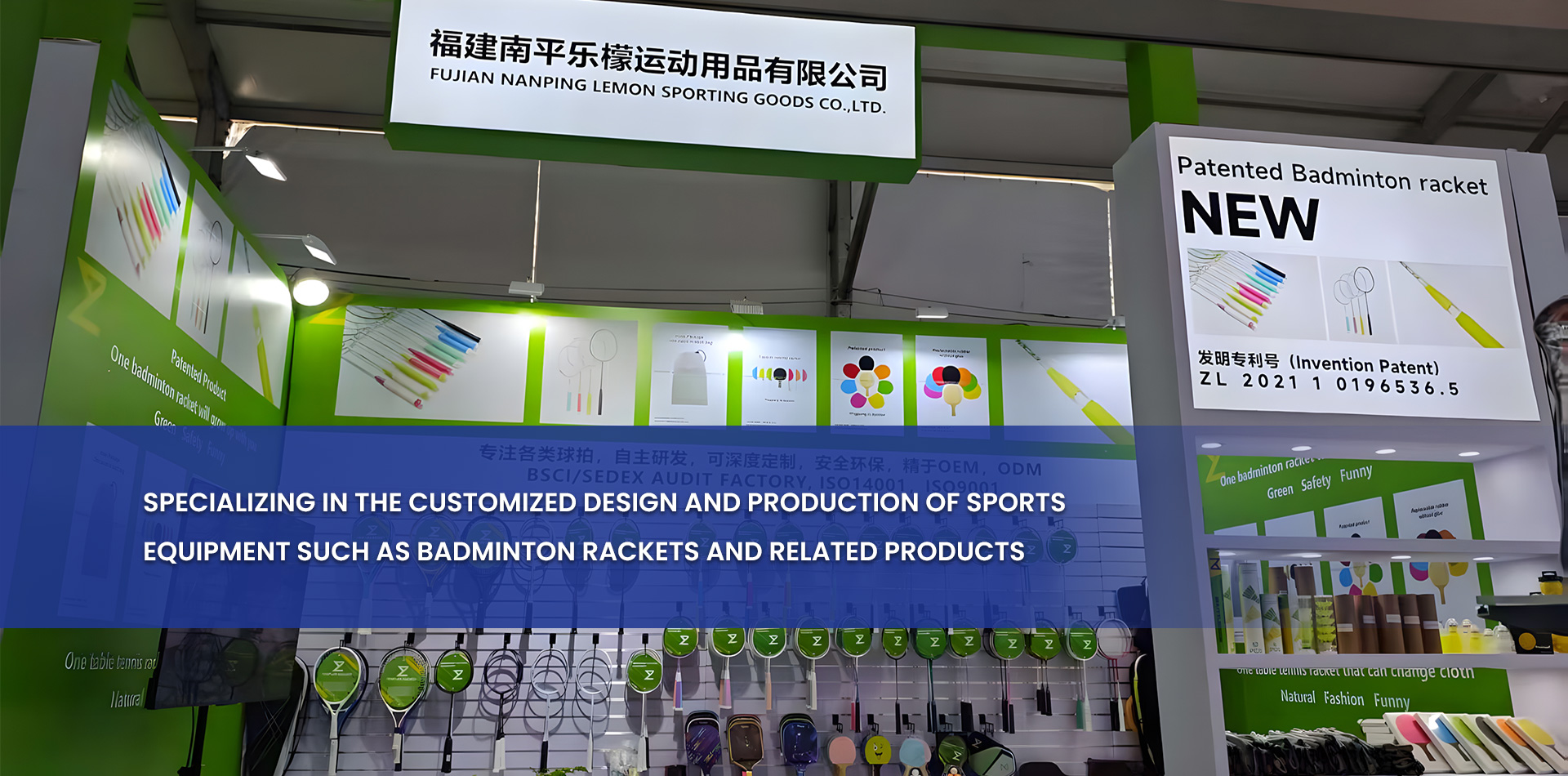
A simple incoming inspection protocol is the buyer's last line of defence. It is inexpensive and catches the majority of problems before they reach customers.
Sample the shipment according to a defined plan (for example, per pallet or per batch).
Measure the key specification parameters and record the results.
Functionally test a representative subset.
Verify labelling, packaging and documentation against the approved artwork.
Document results by batch number and raise trends with the supplier.
Reject or negotiate remedies for any lot that fails the criteria.
Keep the data. A buyer who can show three months of measured results has far more leverage in a quality conversation than one who reports only that a batch felt wrong.
Understanding why quality varies helps buyers ask better questions.
Raw material substitution: lower-grade material used to reduce cost.
Tool wear: moulds and dies degrade and produce out-of-tolerance parts over time.
Process drift: settings change without documentation.
Operator variation: manual steps introduce inconsistency.
Sub-supplier quality: components from third parties may not meet the same standard.
A factory that monitors these factors proactively prevents most defects before they occur.
Put quality terms in the contract, not just in conversation. Specify the standard, the sampling plan, the acceptance criteria, the remedy for non-conformance, and the documentation you expect with each shipment.
This protects both sides. The supplier knows exactly what is expected, and you have a defined basis for discussion if something goes wrong.
Recurring quality management means tracking a small set of metrics rather than reacting to individual complaints.
| Metric | What It Measures | Target | Action If Breached |
|---|---|---|---|
| Defect rate | Share of units failing inspection | < 1% | Investigate root cause with supplier |
| On-time delivery | Shipments meeting the agreed date | > 95% | Review capacity and planning |
| First-pass yield | Units passing without rework | > 98% | Analyse process weak points |
| Warranty claim rate | Field failures under warranty | < 2% | Reassess design and testing |
| Documentation accuracy | Correctness of shipping paperwork | 100% | Tighten release checklist |
Track these monthly and review them with the supplier quarterly. A small set of well-understood metrics beats a large set of ignored reports.

The applicable standards depend on your destination market and product category. These are the ones most commonly requested.
BWF Laws of Badminton: verify the factory can supply the current certificate and that its scope covers your product.
ISO 9001: verify the factory can supply the current certificate and that its scope covers your product.
CE: verify the factory can supply the current certificate and that its scope covers your product.
REACH: verify the factory can supply the current certificate and that its scope covers your product.
BWF approval: request the certificate and confirm validity.
ISO 9001:2015: request the certificate and confirm validity.
CE: request the certificate and confirm validity.
This is the workflow that turns a quality policy into shipped quality.
Approve the specification and the golden sample in writing.
Verify incoming materials against certificates.
Control in-process parameters and record them.
Run functional and safety tests at defined intervals.
Perform 100% or AQL final inspection before packing.
Complete a pre-shipment inspection with photographic records.
Archive the batch documentation for traceability.
Feed field performance back into design and process improvement.
Pre-shipment inspection is the last point where defects can be caught before goods leave the factory, and its scope determines its value. A professional inspection of {p0l} covers four layers:
| Layer | What Is Verified | Method |
|---|---|---|
| Quantity and packaging | Carton count, weights, shipping marks match the order | Count and cross-check against packing list |
| Workmanship sampling | Finish, assembly, visible defects on a statistical sample | AQL sampling per ANSI/ASQ Z1.4 or equivalent |
| Function and safety | Products operate; safety-critical parameters in range | Functional test on sampled units, gauge checks |
| Documents | Test reports, certificates, user manuals present and correct | Document review against destination-market requirements |
Inspections fail most often at the fourth layer: goods are fine but the paperwork is not, and clearance or retail readiness suffers anyway. Book the inspection so results arrive while the container can still be corrected â at least five working days before the planned loading date is a practical rule in badminton and racket sports equipment trade.
A certificate confirms compliance with a standard following assessment by an accredited body. A test report records the results of specific tests. Both are useful; the certificate is a higher-level signal, while the report gives detail.
ISO 9001 confirms that a documented quality management system is in place and audited. It makes quality repeatable but does not by itself guarantee a specific product's performance. Combine it with product testing.
Most buyers re-audit annually, or more often if the supplier is new, critical, or has had recent quality issues. Periodic third-party testing complements internal audits.
Document the failure with evidence, notify the supplier formally, and agree a remedy â rework, replacement, credit or return. Track the resolution to confirm the root cause is fixed.
Yes, and it is good practice. Many buyers appoint a third-party inspection company to verify goods before they leave the factory.
It depends on the market: CE for the EU, UL or ETL for North America, and specific standards for food, medical or electrical applications. Confirm the requirement for your destination before ordering.
Check the issuing body's database, confirm the certificate number, scope and validity, and ensure the product in question is covered.
Broadly, yes â but not perfectly. A structured audit and batch testing reveal real quality differences that price alone cannot.
Professional procurement rarely treats each order as a separate event. Instead, the year is organised into a sourcing cycle: a quarterly capacity review, a mid-year supplier audit, an annual commercial renegotiation and a rolling improvement log. This rhythm turns scattered transactions into a managed programme.
Q1: review last year's defect, delivery and price data; set this year's targets and reconfirm forecasts with factories.
Q2: audit the top suppliers on site or by video; verify certification renewals before they lapse.
Q3: renegotiate commercial terms using the full-year volume picture rather than order-by-order pressure.
Q4: qualify one new supplier as a second source; test the supply chain against a simulated disruption.
Continuous: log every non-conformance and every exceptional save; the log drives next year's agenda.
Buyers who run this cycle report fewer surprises, because problems surface at a scheduled review instead of at a container's arrival. The cycle also changes the relationship with suppliers: badminton and racket sports equipment factories plan better for buyers who are predictable, and predictability is rewarded with priority when capacity tightens.

You do not need to be a statistician to benefit from statistical thinking about quality. Three ideas cover most buyer decisions: variation is normal, control limits describe natural variation, and specification limits describe customer requirements. A process can be stable and still produce out-of-spec product â which is why stability alone is not a quality promise.
| Concept | What It Means | Buyer Question |
|---|---|---|
| Process capability (Cp/Cpk) | How comfortably the process fits inside the spec | What is the Cpk for our critical dimensions? |
| AQL sampling | Statistical acceptance for inspection lots | Which AQL levels will you apply to our orders? |
| Control charts | Detecting drift before defects occur | Show me a control chart from a recent run |
| Measurement system analysis | Whether the gauge itself is trustworthy | How are your gauges calibrated and verified? |
A factory that answers these questions fluently almost always has a functioning quality system. A factory that answers with slogans does not â and no certificate compensates for that gap.
Most purchase agreements say what happens if quality is perfect. The valuable clause describes what happens when it is not. A workable non-conformance procedure has five steps:
Buyer documents the issue with photos, measurements and batch numbers within an agreed window after arrival.
Supplier acknowledges and proposes root cause plus corrective action within a fixed number of days.
Parties agree a remedy â rework, replacement, credit or discount â proportionate to the finding.
Corrective action is verified on the next shipment, not just promised.
Chronic findings trigger escalation to senior management on both sides.
Suppliers respect buyers who raise issues precisely and calmly. The procedure also protects the supplier: without agreed rules, every dispute is a negotiation from scratch, which stresses the relationship far more than the defect did.
Every measurement in the quality chain is only as good as the instrument behind it. A micrometer that has drifted measures nothing reliably, and an inspection report built on it is theatre. Buyers should confirm three things: instruments are calibrated on a schedule, calibration is traceable to national standards, and critical inspections use instruments whose accuracy exceeds the tolerance being checked by a comfortable margin.
Warranty documents are written to be reassuring and to be narrow at the same time. Before relying on one, buyers should locate four specific boundaries: duration, scope, exclusions and the claim procedure. Each boundary is where disappointment lives.
| Warranty Element | Typical Wording | What to Confirm |
|---|---|---|
| Duration | '12 months from B/L date' | Date basis matters: B/L, arrival or installation start can differ by months |
| Scope | 'Defects in material and workmanship' | Wear parts, consumables and cosmetic items are often excluded |
| Exclusions | 'Improper use or maintenance' | Ask what documentation they require to prove proper maintenance |
| Remedy | 'Repair or replacement at supplier discretion' | Who pays freight, customs and labour for the remedy? |
| Claim procedure | 'Notify in writing' | Deadline windows; evidence format; response time commitment |
Where the standard warranty falls short, it can be negotiated â extended duration for core components, stocked spare-part commitments, or a response-time service level. Factories with confidence in their product agree to specific commitments more readily than those without.

Packaging decisions made casually at order time create costs at every later stage: freight (volumetric waste), damage (inadequate protection), clearance (missing marks) and retail (wrong language or barcode). A packaging annex to the purchase order prevents most of it:
Export cartons: specified strength (e.g. bursting strength or stacking grade), moisture protection for sea freight.
Shipping marks: consistent across cartons, packing list and bill of lading.
Inner packaging: language of user manuals, barcode and label requirements of the destination market.
Palletisation: pallet dimensions, fumigation or ISPM-15 treatment for wooden packaging.
Volume data: carton dimensions and gross weights supplied before booking, not at loading.
For badminton and racket sports equipment products that are heavy or bulky relative to value, packaging optimisation often moves landed cost more than price negotiation does. Ask the factory for their standard packing proposal and challenge the volumetric efficiency of it â they usually have an alternative.
Test names appear on reports without explanation, and buyers equate all testing with safety. Understanding what each method proves prevents both false confidence and unnecessary test spending:
| Test Type | What It Proves | What It Does Not Prove |
|---|---|---|
| Type (design) test | The design meets the standard under lab conditions | That your production batch meets it too |
| Routine / production test | Each unit passes basic checks at the factory | Full compliance with every clause of the standard |
| Sample-based batch test | That lot met acceptance criteria at sampling points | Zero defects in unsampled units |
| Field / site trial | Performance in real operating conditions | Repeatability across all production |
| Ageing / life test | Expected service life under accelerated conditions | Exact calendar life in your environment |
A sound verification strategy layers these: type test certificates for market access, routine tests for every unit, and periodic independent batch testing scaled to your volumes and risk tolerance.
Neither is universally right. Trading companies add cost but also add service: smaller MOQs, mixed-product containers, better communication. The failure mode is not the middleman â it is not knowing who you are dealing with. Confirm which you are talking to and evaluate accordingly.
At minimum: one from normal production (not a hand-polished prototype), tested against the full specification, plus a retained golden sample kept by both parties as the production reference. For critical applications, request a second sample from a different production run.
For the first three orders with any new supplier, yes â it is the cheapest available risk control. After a clean track record, most buyers move to every second or third order, with immediate reinstatement after any non-conformance.
The specification acknowledgement: a signed confirmation by the supplier of the complete technical and commercial specification. Nearly every dispute reduces to a disagreement about what was agreed; this clause makes the agreement itself unambiguous.
Ask for the cause in writing (material index, freight, currency), request evidence, and compare against public indices. Legitimate increases follow input costs; opportunistic ones follow demand. The discussion is easier when your annual agreement includes a price-adjustment mechanism from the start.
Sourcing capability should live in the organisation, not in one person's inbox. Three habits transfer knowledge reliably: a shared supplier file with audit results and scorecards; a decision log recording why each major sourcing choice was made; and a specification library where every order's technical annex is archived and version-controlled. New team members inherit judgement instead of restarting the learning curve â and the business is resilient to absences and turnover.

Writing risks down changes how teams buy. The register below covers the risks that account for most losses in {indv.lower()} sourcing; each has a mitigation and a natural owner. Copy it, adapt the weightings to your category, and review it quarterly.
| Risk | Early Indicator | Mitigation | Owner |
|---|---|---|---|
| Quality drift | Rising minor defects in incoming inspection | Tighten AQL sampling; request process data | QC lead |
| Supply disruption | Single line, single region, no buffer | Qualify second source; hold 4â6 weeks buffer | Procurement |
| Compliance gap | Certificate nearing expiry or scope mismatch | Renewal calendar; pre-shipment document check | Compliance |
| Cost volatility | Input-cost indices moving against you | Adjustment clauses; periodic hedging for large exposure | Finance |
| Logistics delay | Port congestion, carrier reliability falling | Earlier bookings; backup forwarder | Logistics |
| Knowledge loss | One person holds all supplier context | Shared supplier file; decision log | Department head |
The discipline is not in the table itself but in the review: risks that were mitigated get retired, new ones get added, and each entry has a date and an owner. An unreviewed register is decoration.
Top suppliers should be reviewed annually with the same seriousness as a strategic project. A structured agenda keeps the meeting factual and forward-looking:
Scorecard review: defect rate, on-time rate, documentation accuracy and responsiveness over twelve months.
Incident retrospective: every non-conformance raised, its root cause and the state of its corrective action.
Forward demand: your forecast for next year; their capacity plan and any constraints they foresee.
Improvement proposals: cost, lead time or quality improvements available from either side.
Commercial reset: price-adjustment mechanism, payment terms and any warranty or service updates.
Relationship health: communication quality, escalation experience, and what each side would change.
Suppliers consistently invest more in buyers who run this meeting well, because it signals a predictable, growing account. The meeting is also where second-source decisions are tested: a supplier told honestly about your dual-sourcing policy responds better than one who discovers it from a competitor's packaging.
Timing shapes negotiation outcomes more than most technique does. {p0l} factories manage capacity and cash across the year, and leverage follows that rhythm:
| Period | Factory Situation | Buyer Leverage |
|---|---|---|
| After Chinese New Year | Restarting lines, seeking orders to fill capacity | Strong â ask for annual pricing with volume tiers |
| Mid-year (JuneâJuly) | Production peak in many categories | Weak for price; good time to lock Q4 capacity |
| Pre-peak (AugustâSeptember) | Booking holiday-season production | Book capacity early; price concessions unlikely |
| Year-end (NovemberâDecember) | Cash collection focus | Good for payment-term flexibility and closing open issues |
None of this means waiting for the calendar instead of negotiating when needed. It means knowing, when a major negotiation is optional, which window gives both sides the best chance of a durable agreement.
Buyers evaluate æå·ä¹æª¬è¿åºå£æéå ¬å¸ on the same dimensions this article has used throughout: documented capability, transparent quality evidence, dependable delivery and fair recovery when problems occur. We keep sample retention, batch records and calibration schedules current, and we welcome audits â in person or by video â because a factory confident in its system loses nothing by showing it.
Whether your next step is a trial order, a factory audit or a technical discussion about {p0l}, our engineering and export teams are available to walk through the checks described in this guide. Bring your operating conditions and your questions; a capable supplier should make the verification easy.
If you want to see how quality is controlled in practice, æå·ä¹æª¬è¿åºå£æéå ¬å¸ (www.factoryracket.com) is happy to share inspection records, test reports and certification for our badminton and racket sports equipment. Visit www.factoryracket.com to learn more and request documentation for your market.
Ce site Web utilise des cookies pour vous garantir la meilleure expérience sur notre site Web.


 English
 Español
 Pусский
 日本語
日本語 한국어
한국어 العربية
 हिन्दी
 Tiếng Việt
 中文
中文



 Téléphone
Commentaire
(0)