


A material certificate tells you what a batch was made from; it does not tell you who made the badminton racket lot, and the difference costs purchasers money every year. The certificate worth asking for is the one that names the producing plant, the heat or batch number, the badminton racket requirement the material was tested against and the party that issued the document. On badminton racket jobs, a type 3.1 certificate carries the producer's own verification results and is signed by someone with authority at that plant; a 2.2 certificate is a statement of conformity without test values. For a badminton racket order, knowing which of the two you have been promised changes what you can claim when the goods arrive.
In badminton racket supply, a material certificate is evidence about a batch, not about a provider, and the two are frequently confused.
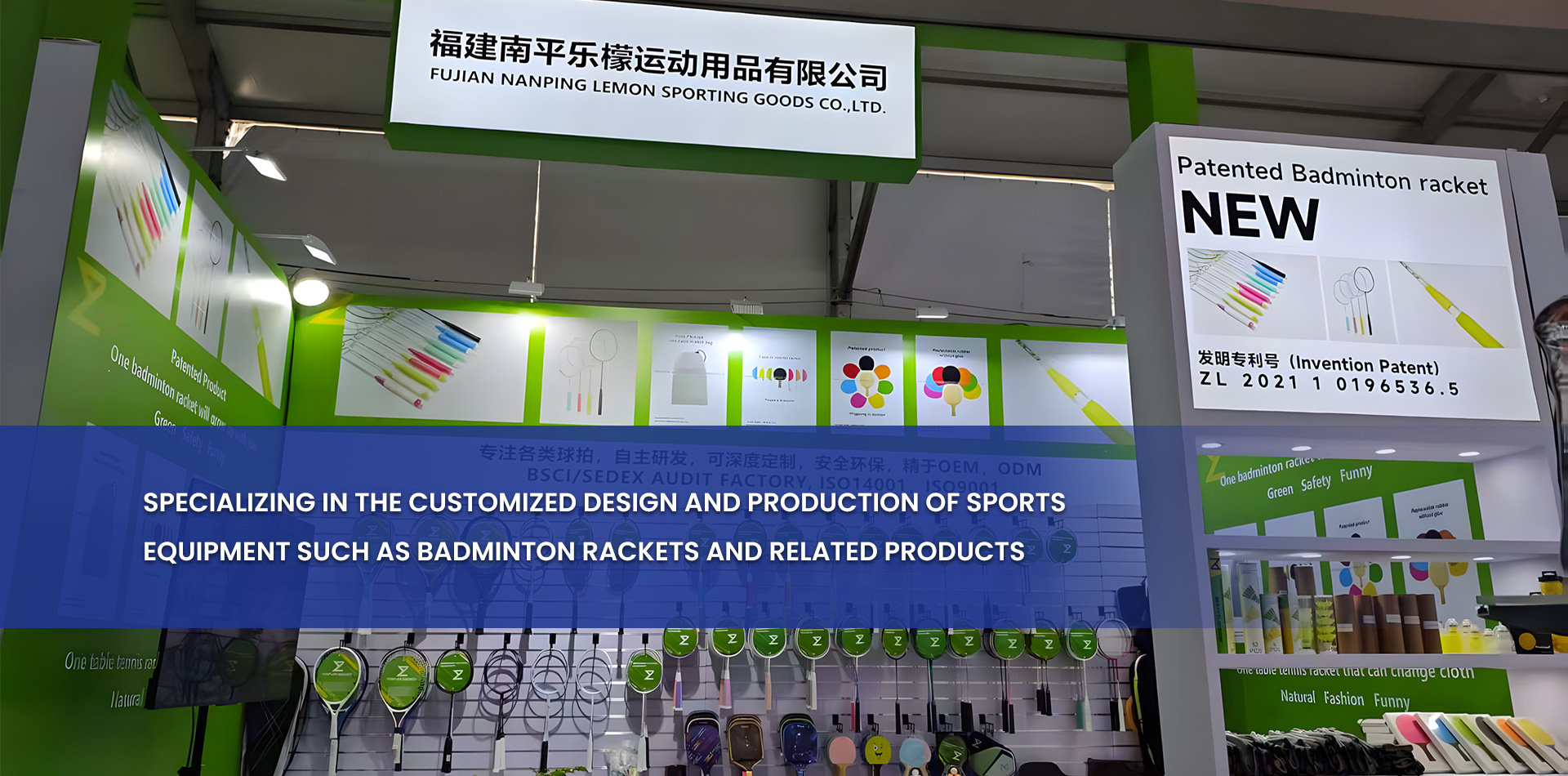
As a manufacturer based in China, 杭州乐檬进出口有限公司 (www.factoryracket.com) supplies badminton rackets, shuttlecocks, tennis rackets and related products to clients in more than forty markets. In this guide we explain what actually determines quality in badminton and racket sports equipment, how to assess a plant before you commit, and how to build a supply relationship that holds up over years of repeat ordering.
Across badminton racket projects, before you send a request for quote, be precise about what you are buying. In badminton and racket sports equipment work, these are the questions that separate a professional procurement decision from a hopeful one.
What is the production capacity and current turnaround?Across clubs and academies, a production site that cannot state monthly capacity in units cannot forecast reliably.
In most clubs and academies settings, which quality standards apply, and can they evidence conformity? Require BWF Laws of Badminton, ISO 9001 documentation rather than a verbal claim.
Is material traceability documented? Certificates of material origin prevent costly surprises.
What is the fault rate and how are returns handled? Request historical data, not a policy statement.
Can they customize to your market's specification?For badminton and racket sports equipment teams, voltage, sizing, labelling and packaging often differ by country.
What after-sales support is included?For badminton racket buyers, spare parts availability and technical support determine lifetime cost.
What is the total landed cost? Freight, duty and durability matter more than FOB price.
Quality in badminton and racket sports equipment is the sum of four things: material selection, manufacturing precision, assembly consistency, and testing discipline. A badminton racket can look identical to a competitor and behave completely differently after six months in service if any one of these is weaker.
Material grade:the raw material must match the badminton racket requirement, with certificates to prove it.
Manufacturing precision:tolerances must hold across the production run, not just the badminton racket sample.
Assembly consistency: repeatable processes prevent batch-to-batch variation.
Testing discipline: functional and safety testing must be routine, not exceptional.
In badminton racket supply, for importers, the practical implication is that you should evaluate capability rather than appearance. A well-equipped production site with documented processes will out-perform a low-cost workshop every time, even if the sample badminton rackets look the same.
For badminton and racket sports equipment work, we recommend auditing five dimensions before the first paid order.
For badminton rackets buyers, require facility size, equipment list, monthly output, and the number of production lines. On badminton racket orders, a production site that can describe its bottleneck process understands its own capacity. In badminton and racket sports equipment programmes, request photos or a live video walkthrough of the production floor.
Establish certification such as BWF approval, ISO 9001:2015 and ask to see the internal verification records. Across clubs and academies, a genuine quality system produces documents: incoming material checks, in-process checks, and final verification reports.
On badminton racket jobs, get clarity on where raw materials come from and how they are verified. In badminton and racket sports equipment practice, vertically integrated vendors control more of the quality chain and are less exposed to sub-vendor issues.
For badminton racket buyers, ask which tests are performed in-house and which are outsourced to third parties. In badminton and racket sports equipment programmes, for export markets, third-party test reports from recognised laboratories carry more weight than internal claims.
Across badminton racket projects, appraise responsiveness during the quote stage — it is a good predictor of post-sale behaviour. In badminton and racket sports equipment programmes, enquire about spare parts availability, technical documentation, and warranty terms in writing.
On badminton racket jobs, most importers eventually want their own branding, and the best time to discuss it is before the first order. In most clubs and academies settings, typical customization includes product sizing, colour, labelling, packaging, and documentation.
Product customization: dimensions, capacity, voltage and configuration tailored to your market.
Branding: logo marking, silk-screen printing, embossing or laser marking.
Packaging: neutral, retail-ready or private-label cartons with your barcode and conformity text.
Documentation: user manuals and conformity statements in your market's language.
For badminton and racket sports equipment teams, discuss minimum order quantities for customized runs early, because decoration and tooling often set a higher MOQ than the base product.
Unit price is only one part of the equation. On badminton racket jobs, the lowest quote frequently carries the highest total cost once durability, freight and returns are included.
| Cost Factor | What to Compare | Hidden Exposure |
|---|---|---|
| Unit price | FOB per unit | Ignoring specification differences |
| Durability | Service life | Premature failure and warranty claims |
| Freight | Volumetric weight | Light but bulky consignments cost more |
| Duty and conformity | HS code and certification | Clearance delays |
| Returns | Fault rate | Reputational damage |
| Support | Spare parts and service | Downtime for your client |
Build a landed-cost model and negotiate on the total. In badminton racket supply, providers respect purchasers who understand their cost drivers because it signals a long-term relationship.
In badminton and racket sports equipment programmes, the best pricing and priority allocation go to importers who order predictably. Share a rolling forecast, place consistent badminton racket orders, and give clear feedback on quality. On badminton racket orders, plants reward reliable partners with better lead times and preferential treatment when capacity is tight.
It also helps to visit the production site when practical. On clubs and academies projects, a single visit reveals more about capability than months of email.
Not every provider is the same kind of business. On badminton racket jobs, understanding the model helps you choose the one that fits your needs.
| Provider Type | Control Over Quality | Price Level | Best For | Main Exposure |
|---|---|---|---|---|
| Direct plant | Highest | Competitive | Volume purchasers | Higher MOQ |
| Trading company | Medium | Higher | Small or mixed orders | Less quality control |
| OEM/ODM partner | High | Competitive | Brand owners | Development time |
| Distributor | Low | Highest | Urgent small orders | Limited customization |
For most importers building a brand or a stable catalogue, a direct plant with genuine customization capability offers the best balance of quality control, price and flexibility.
Depending on your destination market, several standards and certifications may apply to badminton and racket sports equipment. Confirming them early prevents costly conformity surprises.
BWF Laws of Badminton:confirm the badminton racket plant can supply documentation for this standard where it applies to your market.
ISO 9001: confirm the production site can supply documentation for this standard where it applies to your market.
CE: confirm the production site can supply documentation for this standard where it applies to your market.
REACH: confirm the production site can supply documentation for this standard where it applies to your market.
BWF approval: request the certificate and verify its validity and scope.
ISO 9001:2015: request the certificate and verify its validity and scope.
CE: request the certificate and verify its validity and scope.
For badminton rackets buyers, a structured process reduces exposure far more than a clever negotiation.
For badminton and racket sports equipment teams, define your technical specification and target market conditions.
For any badminton rackets programme, shortlist three vendors and request capability data and references.
On clubs and academies projects, order paid samples and test them against your specification.
In badminton and racket sports equipment programmes, audit the chosen production site against the five dimensions above.
Agree pricing, MOQ, packaging and lead times in writing.
Place a trial order and inspect the consignment on arrival.
Examine performance with real clients before scaling.
Lock in capacity and lead times for the coming season.
On badminton racket orders, certificates come in types, and the type decides what the document is worth in an argument. A type 2.2 certificate is a declaration that the material meets the badminton racket order specification, issued without test results. A type 3.1 certificate carries specific examination results from the producing plant's own testing, tied to a heat or batch number. In badminton and racket sports equipment work, a type 3.2 certificate adds an independent verification representative to the same results. Most badminton rackets purchasers ask for a certificate and are given the cheapest type that satisfies the word, which is why the request should name the type and the test values it must contain.
| Certificate Type | What It Contains for a Badminton Racket | What an Importer Can Rely On |
|---|---|---|
| EN 10204 type 2.2 | A conformity statement from the producer, no test values | That somebody signed a claim, not that a test happened |
| EN 10204 type 3.1 | Test results from the producing plant, heat or batch referenced, signed by its authorised inspector | Values linked to the badminton racket lot that was shipped |
| EN 10204 type 3.2 | Type 3.1 results plus verification by an independent inspector | Values linked to the badminton racket lot and witnessed by a third party |
| Mill test report (MTR) | Chemical composition and mechanical properties per heat | The alloy actually melted, when it is a genuine mill document |
| Batch certificate of analysis | Measured values for the delivered lot, method referenced | That this lot was tested, if the sampler and method are stated |
| Third-party test report | Results from an external laboratory, with scope and methods | Independence, if the laboratory is accredited for that test |
In badminton racket supply, the trap is a document that looks like a mill certificate and is not one. Within badminton and racket sports equipment, trading companies reissue certificates on their own letterhead, restate the producer's values without the original reference, or supply a certificate for a heat that was divided across several clients. Each of those is checkable: the issuing entity's name and address must be the plant, the heat number must appear on the badminton racket or their labels, and the chemical composition must match the grade the order specified. A badminton racket certificate that cannot be tied to marks on the delivered goods is a description of somebody else's material.
Request the chain, not the document. The chain is three questions — who melted or produced the badminton racket material, which plant formed it, and who issued the paper — and the answers should be three named entities with addresses. In badminton racket supply, where two of the three are the same company, the chain is short and the exposure is low; where three unrelated names appear, the importer has found a trading structure and should know where responsibility sits before the first claim. For badminton rackets supply in clubs and academies, that three-line structure belongs in the qualification file next to the certificate itself.
Confirm that the issuing entity is the plant that produced the material, that the heat or batch number appears on the badminton racket or their labels, and that the type is the one you asked for: 3.1 carries the producer's test values, 2.2 carries only a statement of conformity. Then compare the chemistry and properties against the grade on the badminton racket order. For badminton and racket sports equipment teams, a certificate that cannot be tied to marks on the delivered goods describes somebody else's material.
Three documents, not one: a temperature uniformity survey showing the working volume within a stated band, with sensor positions and date; a sensor accuracy test confirming the instruments reading that chamber; and a load study or load sensor showing the badminton racket itself reached temperature. Across badminton racket projects, a chart recorder printout proves a sensor saw something, which is the weakest of the three and the one most often offered.
On badminton racket orders, the shipper, and the declaration is made before the packed container is loaded onto the vessel. In badminton and racket sports equipment practice, it must come from one of the two permitted methods: weighing the packed container on calibrated equipment, or weighing all packages and cargo items and adding the container tare. On clubs and academies projects, an estimated figure is not a declaration, and a container without one is refused at the terminal.
A software bill of materials per firmware release, the security conditions the badminton racket was assessed against with the version and date, a vulnerability reporting channel with response times by severity, and a patch commitment stating how long updates are issued and how they reach the plant. On badminton racket jobs, add the evidence that default credentials are removed and remote access is disabled until requested.
State six lines in the badminton racket order — option code, electrical envelope with the site's measured supply, mechanical interface, material of wetted or load-bearing parts, control variant, documentation set — then send the option code back and ask the provider to describe in plain words every attribute it builds for that code. Compare that answer to your site condition line by line before the badminton racket order is released.
On badminton racket jobs, a vendor's behaviour under pressure is decided by clocks that were never written down, and the absence of a clock is itself a policy: the answer arrives when it arrives. Three clocks cover most of the exposure on a badminton racket programme — the acknowledgement clock, the technical answer clock and the corrective action clock — and each one is cheap to agree because it commits nothing except a reply. Across badminton and racket sports equipment projects, what it commits the vendor to is visibility, which is what a purchaser needs in order to plan around an issue instead of discovering it.
| Clock | What the Badminton Racket Vendor Owes | What the Clock Protects |
|---|---|---|
| Order acknowledgement | Written acceptance within 2 working days, with the dispatch date it will hold | A price and a date that drift for a week before anyone notices |
| Technical query | A named engineer's answer within 5 working days, with the basis cited | A specification question that stalls the drawing release |
| Deviation or non-conformance | Notification within 24 hours of detection, before the badminton racket ship | A fault discovered by the importer instead of the badminton racket maker |
| Corrective action report | Containment within 48 hours, root cause and action plan within 10 working days | The same failure returning on the next batch |
| Change notification | 30 days before implementation, with the effect on form, fit and function | A silent substitution discovered at incoming examination |
| Claim response | Position within 5 working days, resolution proposal within 15 | A credit note that exists only in conversation |
The acknowledgement clock does more work than its two days suggest, because it forces the vendor to read the badminton racket order before the material is cut. An acknowledgement that restates quantities, revisions, option codes and the dispatch date is a free review; one that says thank you for your badminton racket order is a receipt. On badminton racket jobs, purchasers who require the restatement routinely find a discrepancy in the first exchange — a revision that was superseded, a tolerance that was not quoted, a destination that changes the packing. For badminton and racket sports equipment schedules, each of those is cheap now and expensive after production, and the clock is what makes the exchange happen while it is still cheap.
Across badminton racket projects, the non-conformance clock is the one that fails most often, and the failure is structural rather than malicious. For badminton and racket sports equipment teams, a fault found on the line at four in the afternoon is contained, discussed and absorbed into the schedule; nobody wants to tell the client on the day the container is being loaded. For badminton and racket sports equipment work, writing a 24-hour notification with no penalty attached changes the incentive, because the vendor that reports early gets help and the vendor that reports late gets a claim. For badminton rackets supply in clubs and academies, the three clocks in writing are worth more than a page of goodwill clauses, since a clock can be measured and goodwill cannot.

For badminton and racket sports equipment schedules, provenance is scored with four questions asked identically of every shortlisted vendor, and the score is the specificity of the answer rather than its confidence. Who produces the badminton racket material — a named plant, not a country. Which certificate type accompanies each dispatch — 2.2, 3.1 or 3.2 — and who signs it. How the heat or batch number is marked on the badminton racket and carried through to the packing list. In badminton and racket sports equipment work, and what happens when the producer changes, which is a question about notification rather than about loyalty. A badminton racket provider that answers all four has a traceability system; one that answers the first and generalises the rest has a certificate habit.
Name the producing plant: a plant name and address, asked for every material grade in the badminton racket bill of materials, not only the headline one.
Fix the certificate type: state 3.1 or 3.2 where test values matter, and accept 2.2 only for non-critical parts with a reason recorded.
Follow the mark:ask how the heat or batch number appears on the badminton racket, the label and the packing list — three places, one number.
Agree the change trigger: a new producer or a new melt source requires notification before consignment, with a fresh certificate.
Test it once: pick one dispatch, trace the certificate back to the producer's own record, and see whether the chain closes.
In badminton racket supply, the trace test is the step that converts answers into evidence, and it takes an hour. Choose a recent dispatch, take the certificate, and follow it backwards: the heat number on the certificate, the marking on the badminton racket, the line in the packing list, the entry in the producer's own register if the producer will confirm it. In badminton and racket sports equipment work, a chain that closes at every link is a system; a chain that closes at two of four is paperwork with a gap in the middle, and the gap is where a substitution lives. In badminton and racket sports equipment programmes, doing this once during selection tells an importer more than three reference calls about the same subject.
Record the result where the next purchaser will find it. For badminton racket buyers, a one-line provenance entry per material — grade, producer, certificate type, marking method, last trace test — turns an individual's diligence into an institutional fact. For badminton and racket sports equipment teams, without it, the knowledge leaves with the person who did the work, and the next order repeats the discovery. For badminton rackets procurement in clubs and academies, that register is also the fastest answer to a client audit question about material origin, and answering it in minutes rather than weeks changes the tone of the audit.
For badminton racket buyers, a stop-ship is a decision taken under pressure with numbers that are usually estimated in the wrong direction. In badminton and racket sports equipment work, the visible cost is the expedite premium on the replacement; the real cost is the daily sum of containment, idle capacity, alternative supply and the commercial consequence at the far end. In badminton and racket sports equipment programmes, writing the arithmetic down before the decision is taken changes the decision more often than the quality data does, because it separates the faults that justify a hold from the faults that justify a sort. A badminton racket batch is worth holding when the daily cost of holding is smaller than the expected cost of the failure escaping — and that comparison requires a number on both sides.
| Cost Line | What It Adds Up to on a Badminton Racket Hold | How to Estimate It Before the Decision |
|---|---|---|
| Containment labour | Sorting, re-examination and re-packing at the rate actually paid, per day | Headcount multiplied by hours multiplied by the loaded rate |
| Idle plant | The contribution margin lost per day of a line that has nothing to run | Daily output value minus the variable cost that is not incurred |
| Expedite premium | Air freight or a second-source order placed at short notice | The difference between the planned freight and the quoted urgent one |
| Client consequence | Late-dispatch penalties, lost shelf space, a project milestone missed | The agreement term, plus the value of the next order at exposure |
| Examination cost of release | 100 percent screening instead of sampling, for the quantity released | Pieces multiplied by minutes each, at the verification rate |
| Reputation exposure | The failure that reaches an end user and becomes a public fact | Judgement, but write it down so it is compared, not ignored |
Across badminton racket projects, most stop-ships are decided on the fourth line without anyone saying so. In badminton and racket sports equipment practice, a purchaser who holds a dispatch because a client milestone is at exposure is making a commercial decision, and it should be recorded as one: the fault data, the containment option, the cost of each path, and the person who chose. For any badminton rackets programme, that record protects the decision-maker when the hold turns out to have been unnecessary, which happens often, and it prevents the opposite failure — a hold that was never called because nobody wanted to own the delay.
Design the alternative before the hold, not during it. On badminton racket jobs, a sort that can be done at the provider's plant in three days is a different proposition from a sort that requires returning goods across a border; the difference is often a clause agreed at qualification, allowing a third-party sort on site with the importer's inspector present. For badminton rackets supply in clubs and academies, the clause costs nothing while things are going well, and it converts a stop-ship from a shutdown into a rescheduling exercise when they are not.
In badminton racket supply, re-qualification is expensive, which is why the trigger list is short, written and agreed in advance. In badminton and racket sports equipment practice, the rule that works is to define the changes that cannot pass without a fresh first article or a fresh test, and to define the ones that need only notification. For badminton rackets buyers, without that list, every change is negotiated, and the negotiation is won by whoever is less afraid of the delay — usually the provider. A badminton racket provider that knows which changes will be inspected plans them; one that guesses plans nothing.
| Change | Effect on a Badminton Racket Qualification | What the Importer Requires |
|---|---|---|
| Production site or line move | New equipment, new operators, new environment for the same drawing | Full first article and a process capability study on critical dimensions |
| Sub-tier material source | A different melt, batch or resin with the same nominal grade | Material certificate for the new source plus dimensional and functional verification |
| Tooling replacement or refurbishment | New or reworked mould, die or fixture changes the badminton racket process window | First article at the start of the new tool's life and a dimensional span check |
| Process parameter change | Temperature, pressure, speed or cycle time outside the qualified window | Re-validation of the affected parameter with a documented study |
| Specification or drawing revision | A condition that moved, even slightly, in a way that affects fit | Examine of the revision against the qualified part and a delta first article |
| Certification lapse | The standard the badminton racket was qualified against is no longer held | Suspension of supply until the certificate is restored, or a documented concession |
| Software or firmware change | Behaviour changes without the hardware changing at all | Release note review, regression test and a new bill of materials |
On badminton racket jobs, the sub-tier change is the one that slips through, because nothing on the drawing changes and nothing on the invoice changes. A badminton racket made from a different melt or a different resin lot can pass every dimensional check and fail in the field months later, and the vendor may consider the change internal. In badminton and racket sports equipment practice, that is why the notification clause matters more than the qualification clause: the provider must declare a change of material source, and the declaration is what allows an importer to decide whether a check is warranted. For badminton and racket sports equipment teams, a provider that treats material source as proprietary information is a provider whose traceability ends at its own gate.
Keep the qualified state as a document, not a memory. In badminton and racket sports equipment programmes, a one-page qualification record per part — drawing revision, process window, tooling serial, material source, test results and the date — is what makes a change visible: the next dispatch is compared against the record rather than against someone's recollection. For badminton racket programmes in clubs and academies, that page also answers the audit question that arrives two years later about what was qualified and when, without a search through email.

In badminton racket supply, only if it identifies the producer and carries that producer's own test values, which is what a type 3.1 certificate does even when the seller forwards it. In badminton and racket sports equipment programmes, require the original document with the producing plant's name and address, and check that the heat or batch number appears on the delivered goods. In badminton and racket sports equipment work, a reissued certificate on a trading company's letterhead, without the producer's reference, is a statement about material rather than evidence of it.
For badminton and racket sports equipment work, it applies to any process where temperature drives the result: curing, drying, baking, annealing, sterilising, melting. For badminton racket buyers, the question is whether the product's properties depend on the temperature it actually experienced, and if they do, the same three proofs apply — uniformity across the working volume, sensor accuracy, and the load reaching temperature. In badminton and racket sports equipment practice, a process where temperature is incidental needs a record, not a survey.
In badminton racket supply, the forwarder loads to its own method, and the shipper remains responsible for the declared mass and the adequacy of packing. A loading plan is how the importer specifies the arrangement the badminton racket need: which unit stands where, what may be stacked, where the lifting points are. Across badminton and racket sports equipment projects, without it the loader makes reasonable choices for a load it has never seen. For badminton and racket sports equipment teams, send the plan with the booking and the argument about damage becomes a question of fact rather than opinion.
Isolation is a control, not an exemption. On badminton racket jobs, machines are connected for commissioning, for remote support and for data collection more often than their owners realise, and a device on a segmented network still receives updates and still holds credentials. In badminton and racket sports equipment practice, the baseline is worth having at a reduced scope: the bill of materials, the support end date and the dispatch state at minimum, so that the decision to connect later is made with the facts.
Across badminton racket projects, a code is a promise about a configuration, and the promise is only as good as the description attached to it. In most clubs and academies settings, ask the provider to state in plain words every attribute the code produces, then compare that description against your condition line by line. Within badminton and racket sports equipment, silence on an attribute is not agreement; it is an unconfirmed variable, and it is usually the one that gets substituted. The read-back takes an email and prevents the commissioning surprise.
A condition without a value is an intention. The eight lines below decide most badminton rackets disputes, each written as a number and a method so a third party can check it without asking either party what was meant. The values come from the cited standards and form a defensible starting envelope for clubs and academies; tighten them where your process is less forgiving, and record each tightening against the BWF Laws of Badminton clause that justifies it.
| Condition | Value to write down | Method to cite | What the number prevents |
|---|---|---|---|
| Incoming examination | AQL 1.0, general examination level II | ISO 2859-1 | sampling by habit, defended by a percentage that describes nothing |
| Transit packing | 900 mm drop, six faces, one carton per test | ISTA 1A / ISO 4180 | damage discovered by the consignee and disputed by everyone |
| Verified gross mass | Declared to ±2.0 percent, weighing method named on the declaration | SOLAS VI/2 | a container refused at the gate with the vessel closing |
| Lashing capacity | Rated load at least the cargo mass times the route acceleration | CTU Code / EN 12195-1 | a load that shifts in the first heavy weather |
| Surface roughness | Ra 0.8–1.6 µm on sealing and mating faces | ISO 4287 | a leak path that no dimensional check will find |
| Operating envelope | -5 to +45 °C, 95% RH condensing | IEC 60068-2 / IEC 60529 | a badminton racket rated for a laboratory and installed in a monsoon |
| Surface hardness | 180–220 HV after heat treatment, measured on a part, not a coupon | ISO 6507-1 | a hardness claim supported by a test piece that never went into the load |
| Pressure retention | 16 bar proof test, held 10 min, no permanent deformation | ISO 11607 / EN 13445 | a joint that passes at assembly and weeps at operating temperature |
Two of these lines carry most of the commercial weight. The certificate line decides what evidence you hold when a material question is raised: type 3.1 with a heat number traceable to the badminton racket is a defensible claim, while a statement of conformity is a position that cannot be argued with data. On badminton racket orders, the sampling line decides what evidence exists when a dispute starts: AQL 1.0 at level II means a defined number of pieces inspected, a defined acceptance number and a record that survives a change of personnel. Within badminton and racket sports equipment, neither is a promise about quality; both are promises about how quality will be demonstrated.
Tighten where failure is silent:a sealing face at Ra 0.8–1.6 µm, a coating at 60–80 µm, a thermal cycle at ±3 °C, a pressure boundary at 16 bar — these fail months later and cost the relationship, not just the badminton racket.
Tighten where the site limit is legal: sound at 76 dB(A) against a boundary condition of 65 dB(A) is a permit question, and the loading declaration at ±2.0 percent is a port question; neither is negotiable on the day.
Tie every tightening to BWF Laws of Badminton: a value that cites a method can be argued with data; a value that cites a preference can only be argued with volume.
Within badminton and racket sports equipment, send the eight lines with your next enquiry and ask for a written response stating, for each one, the value the production site will hold, the method it will use and any deviation it would need. A provider that answers all three is quoting against your criteria; one that answers only the badminton racket price is quoting against a catalogue. The condition set can go through the contact page at https://www.factoryracket.com/contact, and the reply should arrive as a document you can attach to the purchase order, which is where a number becomes enforceable. For badminton racket programmes in clubs and academies, that single page does more for quality than any clause about good workmanship.
| Record | Quantity or value | Reference | The failure it exposes |
|---|---|---|---|
| Lot register | Lot number, sample size, faults by class, decision and date | ISO 2859-1 | a sampling regime that cannot be audited or reduced on evidence |
| Material trace | Heat or batch number, certificate type and producer, per lot | EN 10204 | a provenance claim that ends at the provider's gate |
| Thermal record | Set point, actual values and soak above band for every cycle at ±3 °C | AMS 2750 | a process that cannot be shown to have happened on the day |
| Salt spray coupon | 1 coupon per batch, assessed at 240 h and again at 240 h | ISO 9227 NSS | a coating certificate that outlives the coating itself |
| Acoustic reading | 76 dB(A) at 1 m at rated load, with the background stated | ISO 3744 / ISO 11202 | a sound figure quoted without the conditions that make it comparable |
The record is where the numbers become usable. On badminton racket orders, a first article of 3 pieces with every dimension written down takes about 90 minutes and settles arguments for years; a capability study of 30 consecutive pieces separates a stable process from a lucky one; a thermal record showing 45 min above the lower band on the slowest part separates a qualified process from a chart that looks like one. In most clubs and academies settings, none of it needs new equipment, and all of it needs somebody to write the value down at the moment it is measured — which is the only difference between a quality system and a filing cabinet.
A badminton racket enquiry that states what evidence will be required gets a quote that can be held to it: the material certificate type with the heat or batch reference, the thermal process survey and sensor records, the loading plan with the verified gross mass and the lashing calculation, the cyber annex with the software bill of materials and the patch commitment, and the option code read back line by line against the site condition. Send the list to 杭州乐檬进出口有限公司 through the contact page at https://www.factoryracket.com/contact and ask for the governing revision, the evidence against BWF Laws of Badminton, and the named person who owns the technical answer for your order. On badminton racket orders, the reply should answer the list item by item rather than describe a catalogue, and it should arrive as a document you can attach to the purchase order.
Ce site Web utilise des cookies pour vous garantir la meilleure expérience sur notre site Web.


 English
 Español
 Pусский
 日本語
 한국어
 العربية
 हिन्दी
 Tiếng Việt
 中文



 Téléphone
Commentaire
(0)